
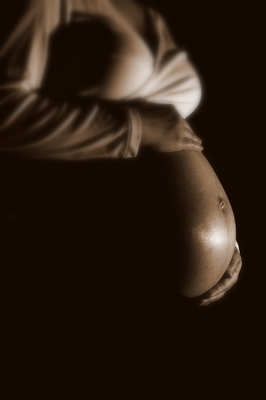
So I wake up Saturday morning to this New York Times piece, Tackling Infant Mortality Rates Among Blacks, and by story’s end, I’m heated. I mean, I’m glad the Times did the story; the more attention drawn to the fact that 13.3 black babies out of 1,000 die every year—almost double the national average and higher than Sri Lanka (!)—the more chance that someone will actually figure out why tens of thousands of African American children die before age 1. But this story had problems.
Big ones.
My beef? While the story rings the alarm on the “quiet crisis” that lacks “the public discussion or high-profile campaigns that accompany cancer, autism or postpartum depression,” as usual, it falls right into the trap of completely devaluing the complexity of the problem by stereotyping black mothers. Witness the subject the Times story highlights: A poor, uneducated, 20-year-old pregnant black woman from Pittsburgh who the reporter suggests had to be talked into actually wanting her baby, and has so little self-control or pre-natal intellect that she’s spent the last seven months gorging on chips, soda, tacos and her “mama’s cooking,” gaining 50 unhealthy pounds that could put her baby at risk. Her baby has a chance of surviving only because of Healthy Start, a nonprofit group that, despite scant federal and absolutely no local financial support, manages to give in-home pre-natal care to moms-to-be who qualify for and need their services.
The piece makes the story of that mom-to-be all of our stories—puts the black infant mortality onus squarely on our shoulders by suggesting if we planned our pregnancies, ate better and were smart enough to seek out and follow up with quality health care, our babies would live.
O_o
Stereotypes of black women, much?
The real story, it seems, is in this paragraph:
Recent studies have shown that poverty, education, access to prenatal care, smoking and even low birth weight do not alone explain the racial gap in infant mortality, and that even black women with graduate degrees are more likely to lose a child in its first year than are white women who did not finish high school. Research is now focusing on stress as a factor and whether black women have shorter birth canals.
But this nugget of information receives extremely short shrift, meriting nothing more than a sentence in a cover story that goes on for a good 1500 words. In a story in a Saturday paper, the least-read paper of the week.
Thanks, New York Times. Way to tackle a subject that your story admits is an important one. *insert image of Denene slow clapping here*
Might I suggest that your reporter direct his attention to Persistent Peril: Why African American Babies Have the Highest Infant Mortality Rate In the Developed World, by Ziba Kashef? The story, written for ColorLines RaceWire, does a fine job of striking to the heart of the matter and giving REAL reasons for why our babies (and other babies of color) may suffer higher infant mortality rates, without leaning on stereotypes. It also gives some suggestions for how, exactly, African American moms-to-be and the people who love them can get the support we need to safely usher our most precious cargo into this world and through their first year. It is, in my opinion, the perfect example of why black-focused media entities like ColorLines—and MyBrownBaby!—exist. Why we’re necessary.
When it comes to coverage of our community in mainstream media, I’m tempted to lean on my mother’s mantra: If you have nothing nice to say, don’t say anything at all. But that would be letting them off way to easy, wouldn’t it? I have the perfect suggestion: how about reporters, editors and producers at these newspapers, magazines and radio, television and cable shows bother just, like, do your jobs well? Report and present stories about black folk with the same effort, zeal and passion as you do stories about your own. Start there, and maybe we’ll actually get somewhere with coverage that says something—and counts.



Denene Millner
Mom. NY Times bestselling author. Pop culture ninja. Unapologetic lover of shoes, bacon and babies. Nice with the verbs. Founder of the top black parenting website, MyBrownBaby.
- Web |
- More Posts


Denene, thanks for the impassioned critique of news writing on this topic. I think you cut straight to the point when you highlighted the paragraph about the stress of racism itself as an important “factor” in health. In anthropology, we talk about race as a social construction with biological consequences.
My grandmother is certainly not your stereotypical black woman and she lost her first six babies and my mom was so premature she held a world record for two years.
I hate the way this made us look, guess what, lots of pregnant women of ALL races gain 50lbs+ during pregnancy. Its almost like when the news reporter chooses the most illiterate person on the block to give commentary on the crime committed in the community. Thank you for your critique, the times clearly needs to come from a better perspective to paint a better picture. As you said, lets get to the bottom of the issue.
Denene, your post had me so fired up, I had to post my own response (from the perspective of medical anthropology): http://parenthropology.blogspot.com/2011/10/tackling-infant-mortality-rates.html?spref=fb
The New York Times did the same thing that most people do today, a generality story. Lump everyone into one neat box. It doesn’t work that way, there are so many factors that can determine the birth rate, for black woman and for woman of other color. I did not know about the shorter birth canal, but I do know that it is time for people to stop generalizing. You and I both know that so many outside factors can lead to the loss of a baby, and the one thing woman don’t need is to have ‘blame’ laid upon them.
Ugh, this story pisses me off too! I’m not surprised that they lumped us into one category. They are trying to “tell our story.” Thank you for writing about this.
I’m so glad I stumbled onto this blog..looks like I have a lot of reading to do!
Denene,
I am a nurse, currently living in Baltimore, going to school for my masters in Public Health Nursing and Certified Nurse Midwifery. I was recently introduced to your blog at a staff meeting about your piece on Amber Rose and Wiz Khalifa’s choice for home birth, and I just kept reading! I know I’m a little late on responding to this particular post (oh what’s 1.5 years in the grand scheme of things??), but I really like what you said about the author putting the blame for the infant mortality rate squarely on the shoulders of the mother. This author obviously did not have the courage or the depth of thought to realize that our health outcomes have less to do with individual factors than they do with a broken system. And, not to point out the obvious, it’s a system that has been designed and implemented by a long line of rich, white men. I feel that this is a phenomenon that has been going on in the patriarchal, interventionist methodology of medical maternal health care in the developed world for quite some time. The woman is blamed for her own health issues and for that of her child. She is thought incapable of fully understanding the medical processes and thus is unable to make rational, informed decisions. So why not let the old, rich, white men make those choices for her, right?? But when things go wrong, the fault clearly belongs to the woman. As a woman, and as a health care professional I can understand how harmful this article was, and although I am not a woman of color, this article infuriates me because it takes people further and further away from any real dialogue about the issues of race and health disparities in our country, an issue that is widely researched and documented, but of which very little is said. This article brings a succinct “it’s not my fault” scenario to light that can leave the white masses at ease knowing they have nothing to do with poor outcomes in other communities. This could not be farther from the truth. I hope that the Times has since realized the harm that such shallow and mindless stereotyping can bring to the attempt for a real, thorough analysis about the complex issues we face in women’s health, particularly with regards to health disparities and race. Thank you for bringing your intelligent, informed, witty, truthful perspective to the table. And next time the Times wants to write about the black, female experience in America, perhaps they will inquire of a black female to write the article. We can always hope, anyways 🙂
Thanks again,
Melanie